
Turn inbound interest into structured lead context
A message such as ‘send details’ leaves a salesperson with several unknowns. A lead generation chatbot can clarify what the customer needs, where they are located and when they want to proceed. Ask one useful question at a time and retain answers already given. If the campaign or product context is available, use it instead of asking the buyer to repeat it. Record facts separately from assumptions so salespeople know which details the customer actually confirmed.
Use AI for lead generation across campaign enquiries
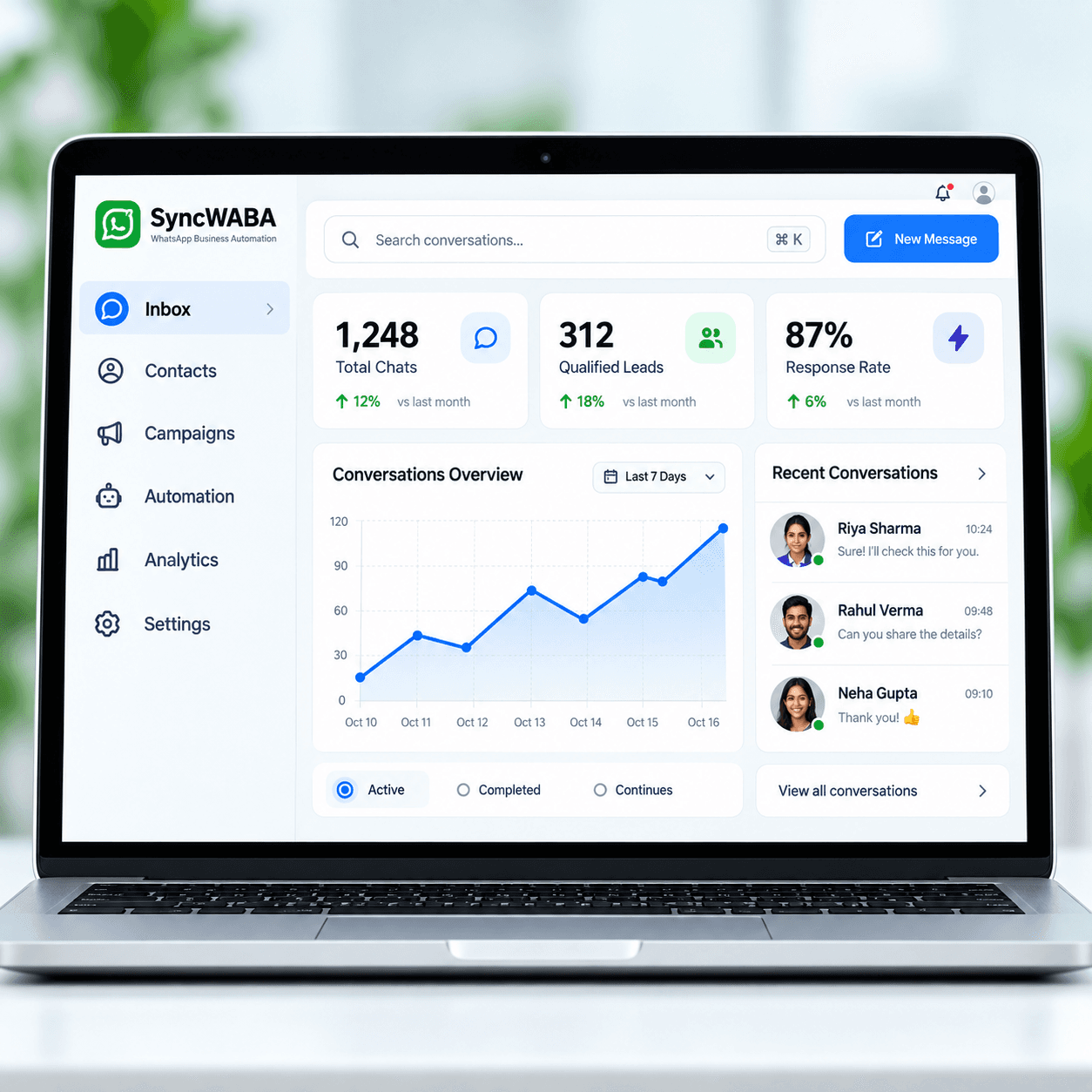
Click-to-WhatsApp campaigns, website contact links and direct enquiries can all lead to a sales conversation. The quality of the destination matters as much as the traffic source. Prepare approved answers and a short qualification sequence for each offer. Collect only the fields that affect fit or the next step. SyncWABA keeps CRM context and conversation history together so a person can review the requirement, respond to an exception or prepare a follow-up without starting again.
Qualification should support a useful next action
An interested prospect may need a brochure, a quotation discussion, a product clarification or a demonstration. Capture that specific request instead of turning every chat into an urgent lead. When the customer clearly asks to meet and an eligible calendar is connected, use a confirmed booking workflow. Otherwise identify the person who owns the follow-up. Lead generation works better when the team can distinguish a new question from an unresolved commitment and see which action remains pending.
Plan a focused launch and review the results
Start with one campaign or enquiry source. Collect the questions your team actually receives, approve the answers and identify the person who owns exceptions. Decide which details matter: product interest, requirement, location and buying timeline. Keep the first rollout narrow enough that the team can review every conversation and correct confusing answers before expanding it. Test short messages, incomplete requests, Hindi, English and Hinglish, plus a direct request to speak to a person. Check that a human can continue from the captured context without asking the same questions again. Evaluate required-field completion and qualified enquiries that progress to a genuine sales conversation, rather than treating every automated response as a successful outcome. Review unanswered questions regularly, assign someone to maintain changing information and agree how customers can reach your team when automation cannot help. Bring these examples to your demo so the conversation starts with your actual operating needs.