
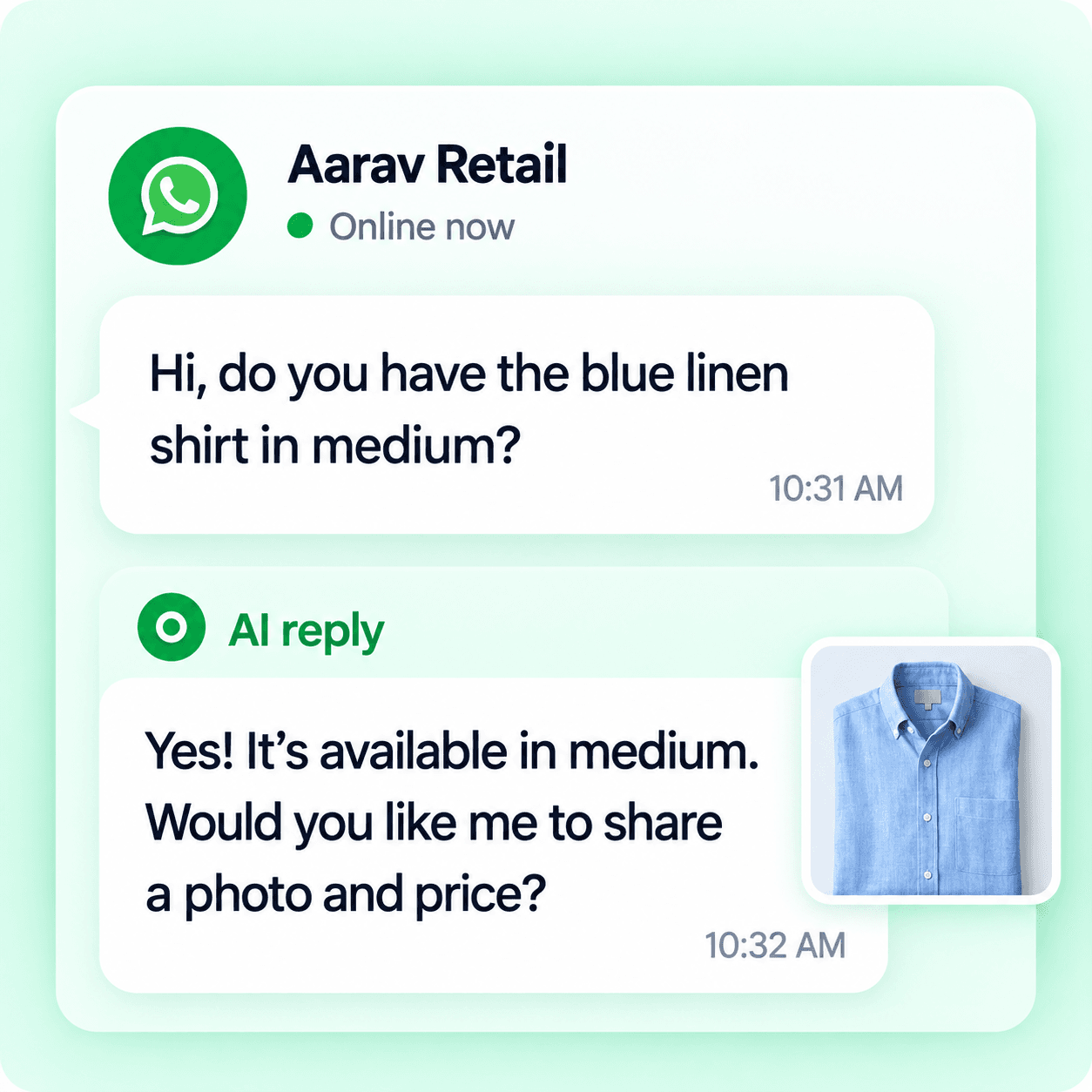
Help buyers explore products through a conversation
People often need help choosing between options before they know which product to request. An assistant can ask about the intended use and explain approved product differences. Keep questions short and use information already provided by the buyer. A shopper comparing fabrics and a manufacturer requesting a specification need different discovery details. Organize knowledge around those decisions so the reply is useful. When suitability is uncertain, involve an expert instead of allowing a fluent explanation to become an unsupported recommendation.
Carry useful context from discovery to the team
A buying conversation may include a variant, delivery location, budget, timing and a request for a quotation. Record the details that affect the next step and preserve the original wording. SyncWABA keeps customer and lead context available in the workspace so the team can continue without repeating discovery. Distinguish facts a customer supplied from assumptions. A human should know which question is unresolved and whether the customer needs a call, a document or confirmation of changing business information.
Separate conversation assistance from checkout actions
Explaining a product is different from placing an order, confirming inventory or collecting payment. Those actions need verified operational integrations or staff involvement. Discuss the systems you use and define exactly which actions are in scope. Never infer that a conversational commerce page means every shopping platform or checkout provider is already connected. Make the handoff clear when the customer is ready to buy, and report an external action as completed only when its authorized workflow confirms success.
Plan a focused launch and review the results
Start with one purchase journey or product family. Collect the questions your team actually receives, approve the answers and identify the person who owns exceptions. Decide which details matter: use case, product preference, location and the requested purchase step. Keep the first rollout narrow enough that the team can review every conversation and correct confusing answers before expanding it. Test short messages, incomplete requests, Hindi, English and Hinglish, plus a direct request to speak to a person. Check that a human can continue from the captured context without asking the same questions again. Evaluate the quality of product answers and buying conversations that reach an accountable sales owner, rather than treating every automated response as a successful outcome. Review unanswered questions regularly, assign someone to maintain changing information and agree how customers can reach your team when automation cannot help. Bring these examples to your demo so the conversation starts with your actual operating needs.