
Understand what a white-label arrangement needs
Removing a logo is only one part of a resale product. Buyers should clarify who contracts with the end customer, which company owns the domain and who manages onboarding. Agree whether invoices, support emails and customer notifications carry the reseller’s branding. Review how software updates are communicated and what happens if the supplier changes a feature. These questions determine the actual customer experience. An ordinary business workspace should not be described as a white-label product unless those rights and responsibilities are explicitly included.
Evaluate white label AI software beyond appearance
A reseller may need client isolation, account administration, billing controls and a way to support customers without exposing another customer’s information. Ask the supplier to demonstrate those operations instead of relying on a screenshot with a different logo. Identify who owns business knowledge and exported data. Confirm whether customer messaging accounts belong to each customer or the reseller, and how disconnecting works. The right evaluation includes the operational lifecycle of a client, from initial setup through support, transfer and account closure.
Consider a branded direct-use workflow instead
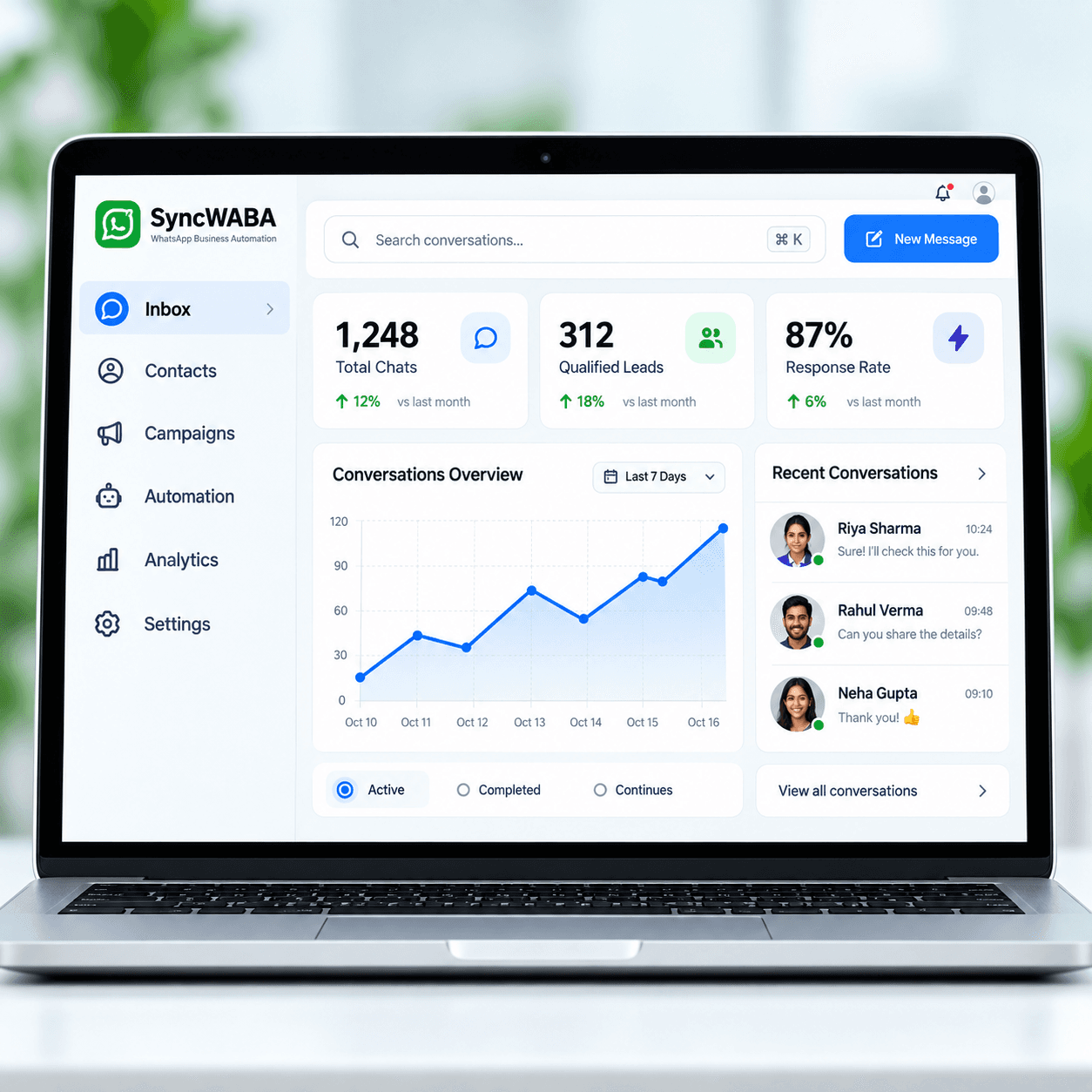
If the goal is to automate enquiries for your own organization, white-label resale may not be necessary. SyncWABA provides a branded workspace for business WhatsApp answers, qualification and human handoff, plus scoped development services. Your team can manage its approved knowledge and customer context directly. Custom workflow development should be discussed as its own service; it does not create permission to rebrand or resell the platform. Choose the product around the actual business requirement and ask explicitly about any commercial rights you need.
Prepare questions before choosing a reseller platform
Write down the number of client accounts you expect to support, their messaging channels and your responsibilities for training and first-line help. Ask potential suppliers how they handle credentials, account separation and service interruptions. Request a written explanation of license rights, branding options and export procedures. Review the support process using a realistic customer issue and confirm how escalation reaches the supplier. Compare the entire operating model, including implementation and recurring usage, rather than selecting a platform only because its dashboard can display your logo.